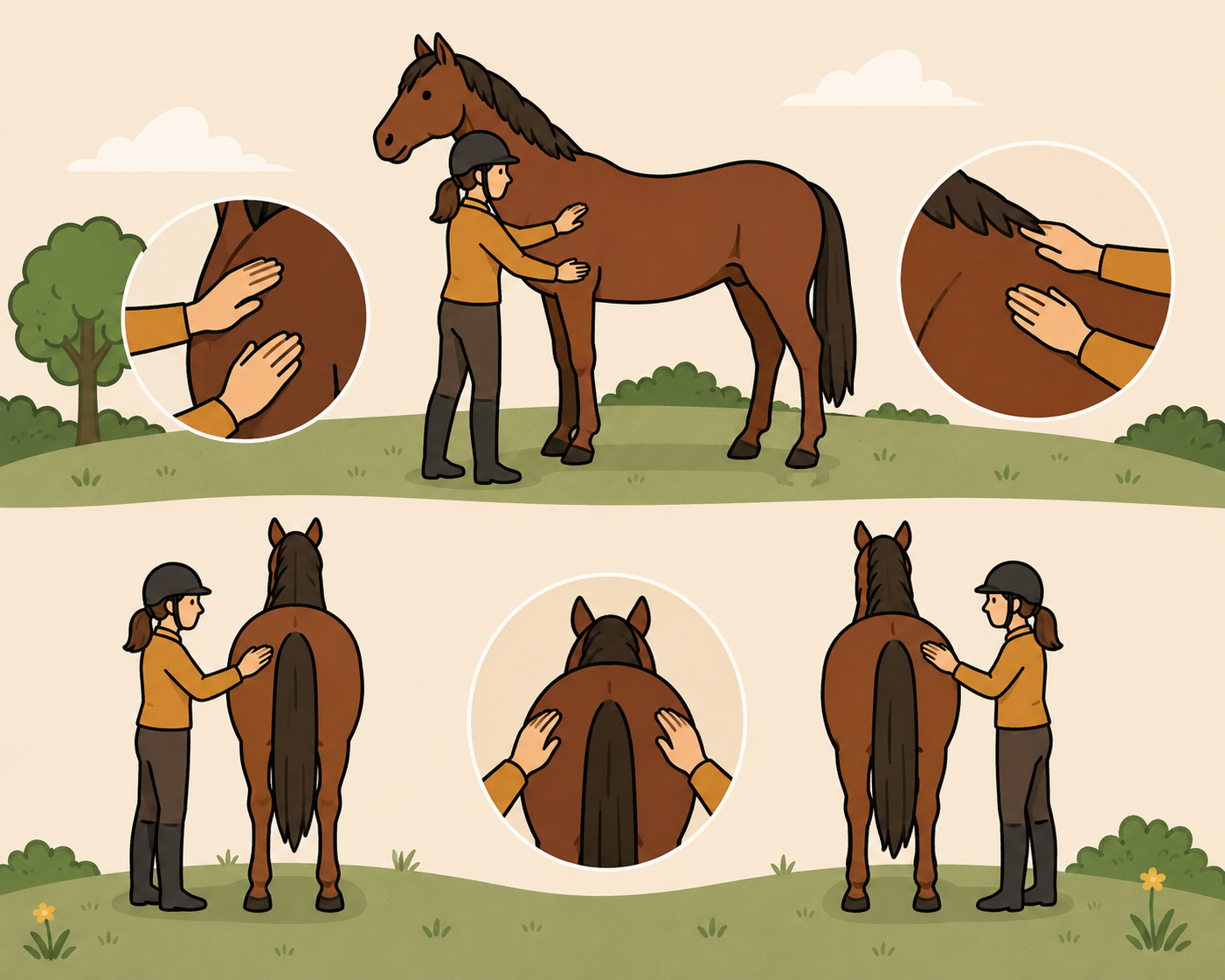
Can walking help your horse lose weight?
YES
regular walks and light exercise can help your horse lose weight, especially if they increase the overall activity level. In a study of Danish horses, horses with little or no training, were much more likely to have a Body Condition Score (BCS) above the ideal range, while horses exercising at moderate or higher levels had significantly lower BCS.
Keep in mind:
Ensure your horse’s acces to feed and treats mathes the nutritional needs
Keep your horse walking at a brisk pace during walks, ideally including short trot intervals
Provide opportunities for turn-out and free exercise, ideally alongside companion horses
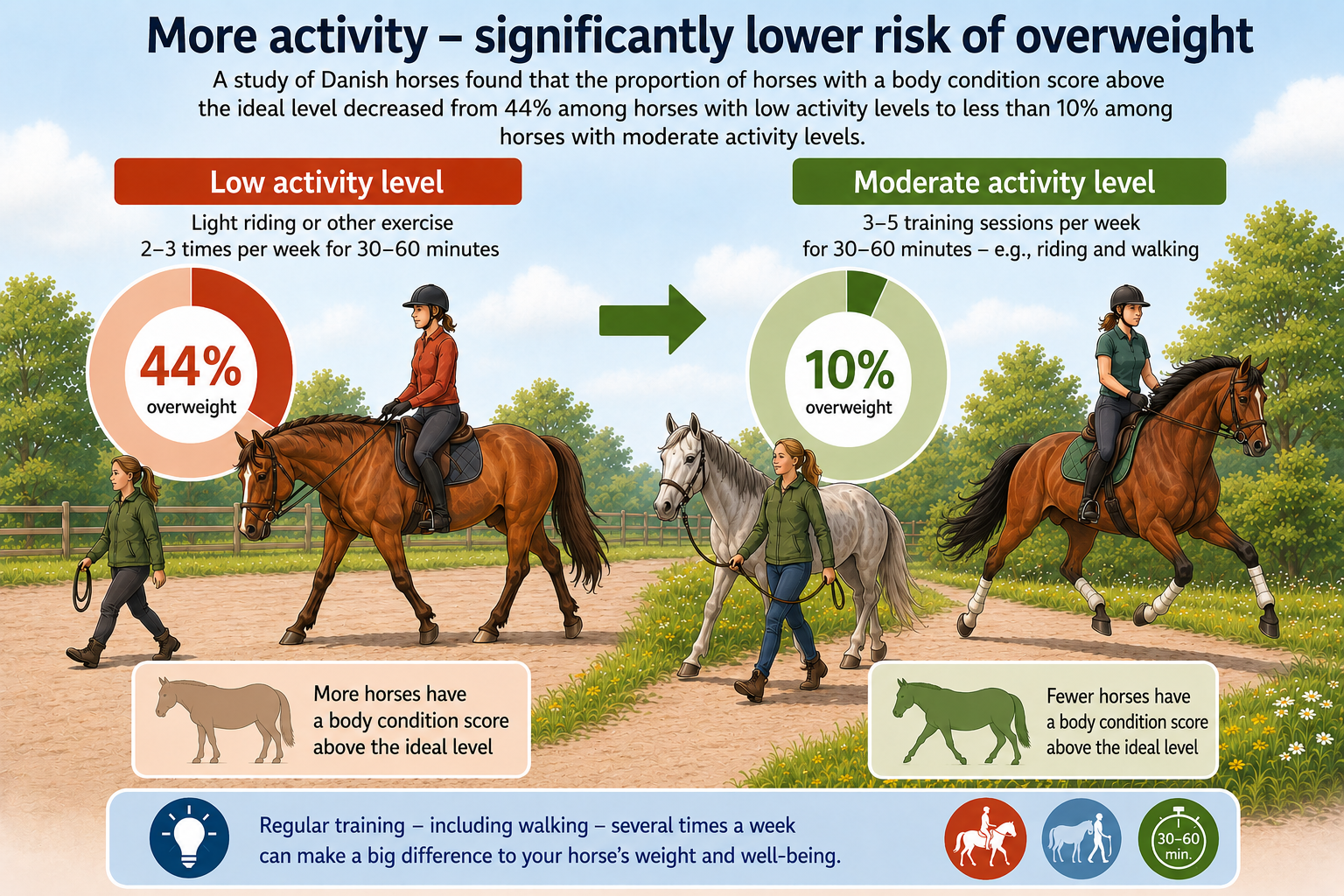
One of the most notable findings from a study of Danish horses was that the proportion of horses with a body condition score above the ideal level decreased from 44% among horses with low activity levels to less than10% among horses with moderate activity levels.
Low activity typically consisted of light riding or other forms of exercise 2–3 times per week for 30–60 minutes, while moderate activity involved 3–5 training sessions per week of a similar duration.
These results suggest that increasing a horse's activity level from low to moderate can have a substantial positive effect on body condition. For many horses, regular exercise sessions can be an excellent place to start (with or without a rider), especially when combined with an appropriate feeding strategy.
Although walking alone may not be sufficient for every overweight horse, a gradual and sustained increase in exercise is an important part of achieving and maintaining a healthy body weight.
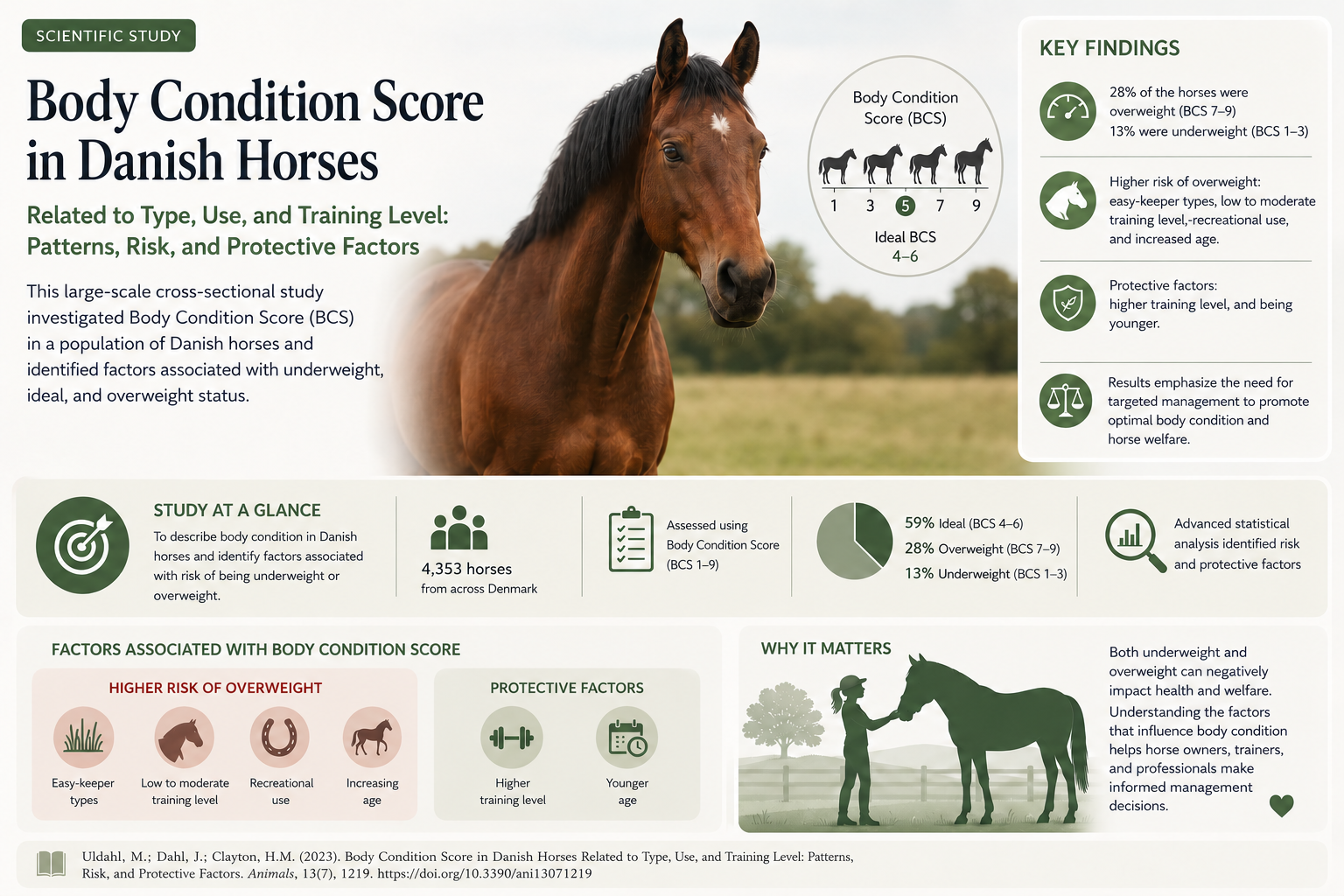
Reference: Uldahl, M.; Dahl, J. Clayton, H.M. Body Condition Score in Danish Horses Related to Type, Use, and Training level: Patterns, Risk and Protective Factors. Animals, 2023.
Regular walks and light exercise can help your horse lose weight, particularly if they contribute to increasing its overall activity level. However, this should be combined with an appropriate feeding strategyand tailored to the horse's age and overall health status.
Conclusion:
See also: