Do horse trainers influence horse welfare?
YES
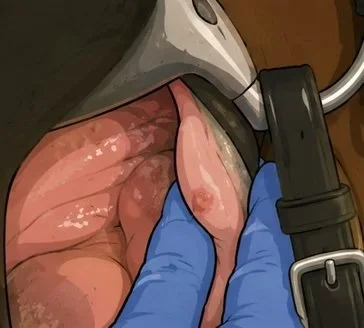
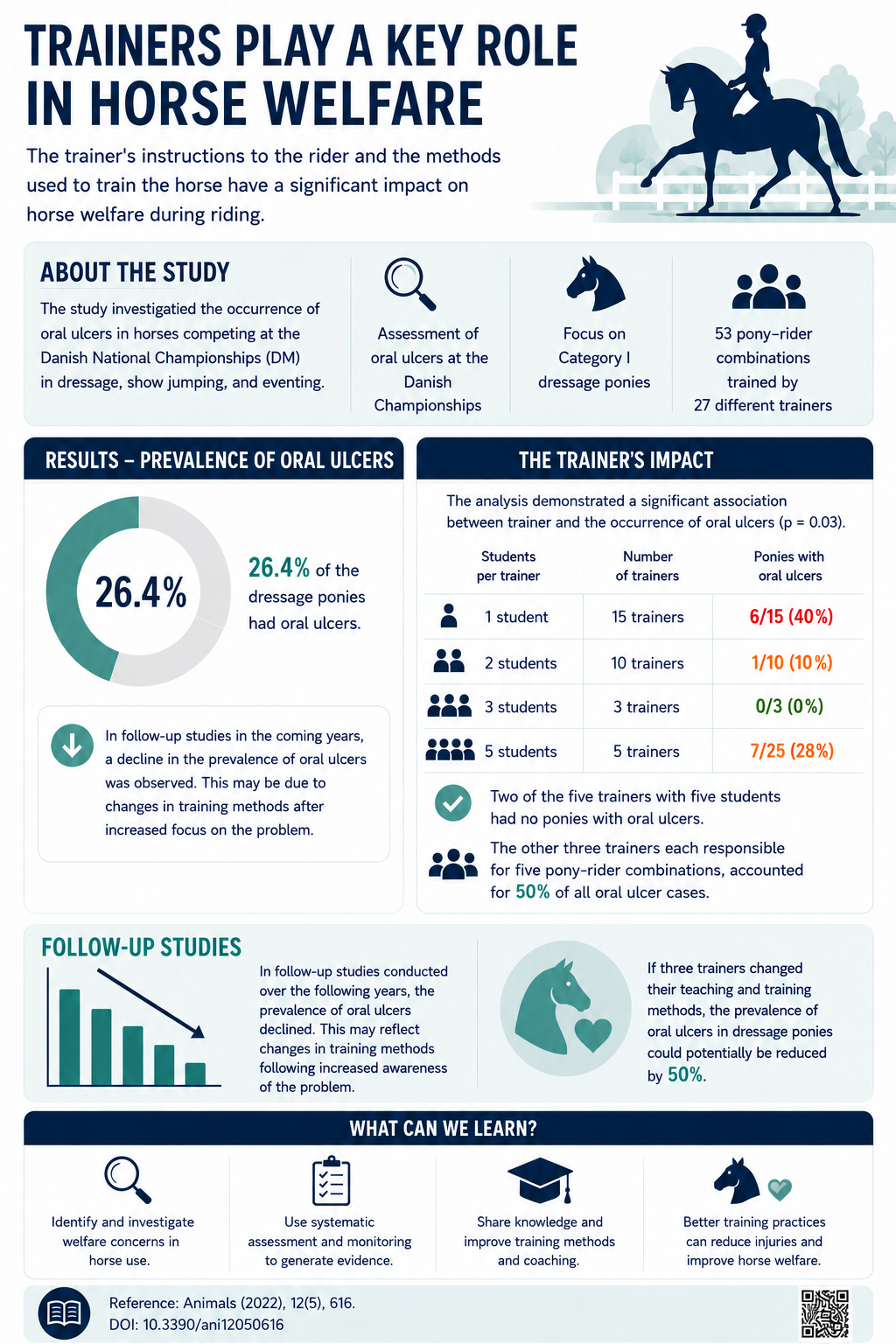
A Danish study carried out at the Danish Championships in dressage, show jumping, and eventing found that 26.4% of the dressage ponies had mouth lesions caused by pressure from the bit. Remarkably, three of the 27 trainers were responsible for training half of the ponies with mouth lesions. By changing the way these three trainers coached their riders and approached training, the number of ponies with mouth lesions could bereduced by half.
Keep in mind:
Check your horse regularly for mouth lesions and other injuries caused by tack.
If you find any injuries, adjust your tack and review your training methods.
Talk to your trainer about focusing on horse-friendly training.
The way a trainer coaches riders and trains horses can have a major impact on horse welfare.
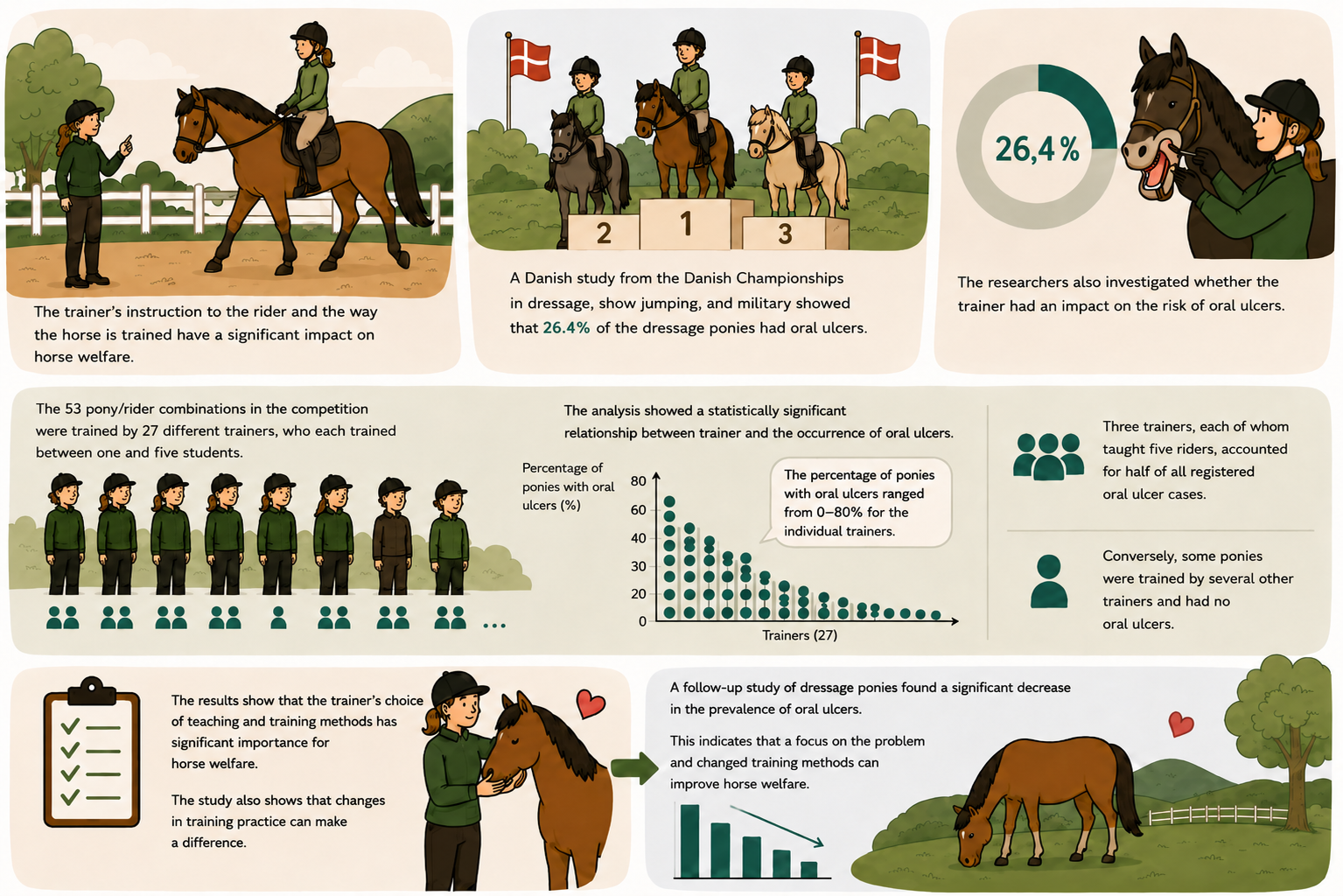
A Danish study at the Danish Championships in dressage, show jumping, and eventing found that 26.4% of the dressage ponies had mouth lesions. The researchers also investigated whether the trainer influenced the risk of these injuries.
The 53 pony-and-rider combinations competing in the championships were trained by 27 different trainers, each coaching between one and seven riders. The analysis found a statistically significant link between the trainer and the occurrence of mouth lesions.
Most strikingly, three trainers, each coaching five ponies, accounted for half of all recorded cases of mouth lesions. In contrast, ponies trained by several other trainers had no mouth lesions at all. Depending on the trainer, the proportion of ponies with mouth lesions ranged from 0% to 80%.
These findings show that a trainer's choice of coaching and training methods can have a profound impact on horse welfare. They also demonstrate that changes in training practices can make a real difference.
In follow-up studies of dressage ponies, researchers found a substantially lower prevalence of mouth lesions. This suggests that increased awareness of the problem, together with changes in training methods, may have led to improved horse welfare.
These findings highlight the importance of regularly assessing and monitoring horse welfare. Identifying and documenting welfare issues makes it possible to improve training and horse management, helpingto reduce the risk of injuries and improve horses' welfare.
Conclusion:
Reference: Uldahl, M.; Bundgaard, L.; Dahl, J.; Clayton, H.M. Pre-Competition Oral Findings in Danish Sport Horses and Ponies Competing at High Level. Animals, 2022. https://doi.org/10.3390/ani12050616
See also: