This Is How to Check Your Horse for Mouth Lesions After Using a Bit:
It is good practice to check your horse’s mouth before and after using a bit. A mouth check only takes a few minutes and can help you detect early redness or lesions before they develop into more serious injuries.
How to Check Your Horse for Mouth Lesions After Using a Bit
1. Inspect the corners of the mouth
Stand beside your horse and inspect the skin around both corners of the mouth. Huden skal være hel og uden tegn på:
redness
chafing or peeling
swelling
lesions
any other form of irritation
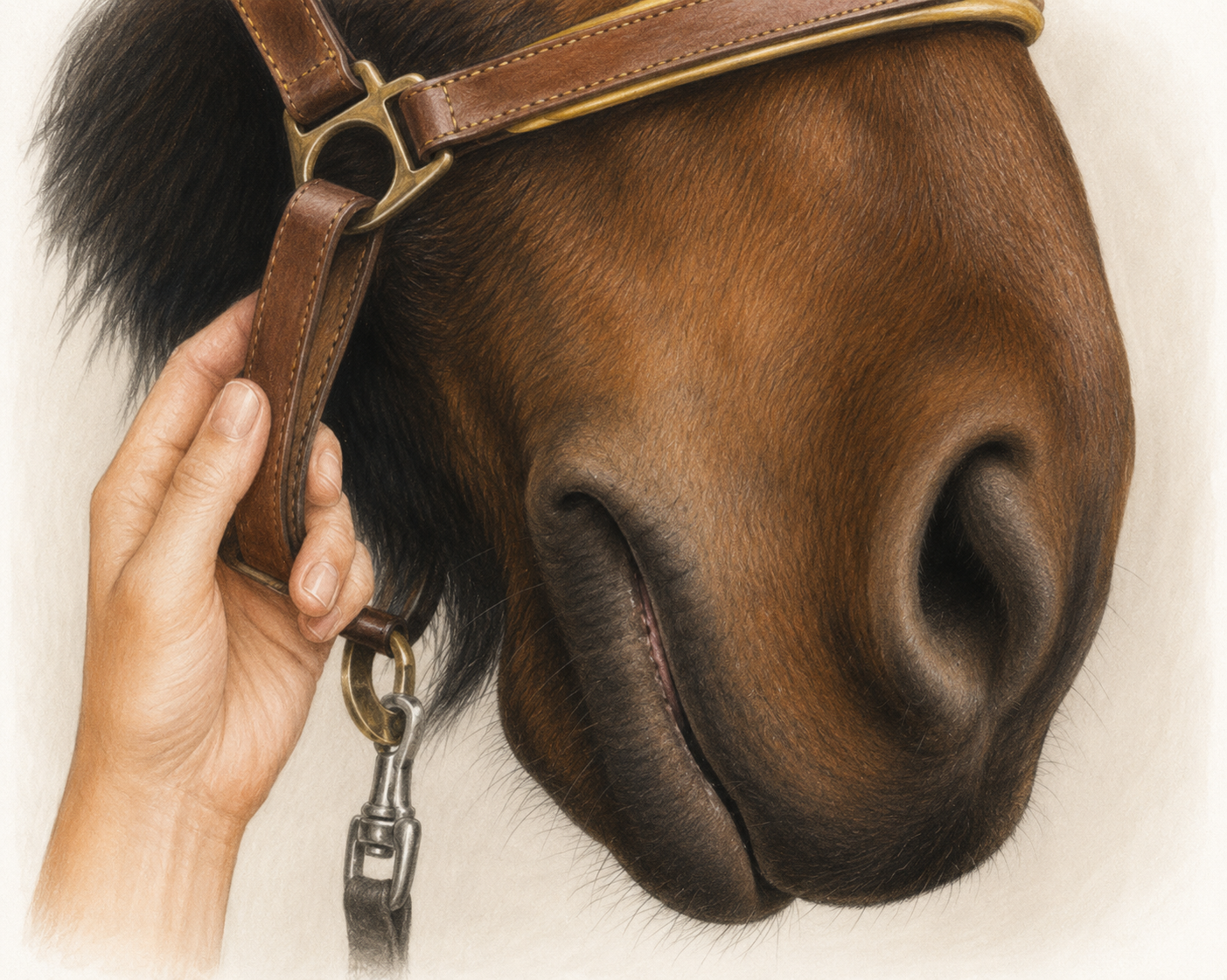
Inspect the skin around the corners of the mouth on both the right and left sides.
2. Inspect the Inside Corners of the Mouth
If necessary, please ask someone to assist by placing a hand over the bridge of the horse’s nose (the bony upper part of the nose) to help keep the horse’s head still.
Stand facing the horse at the front of its head. To inspect the right corner of the mouth, position yourself slightly to the right-hand side of the horse’s head.
Place your thumb tip in the corner of the mouth where the lower lip begins, -the area where the bit normally rests and where you would usually ask the horse to open its mouth when bridling. Gently slide your thumbinside the lip and carefully roll the lip outward so that you can inspect both the outside (skin surface) and the inside (mucosal surface).
Most bit-related injuries occur on the inside of the corners of the mouth, so it is important to inspect this area thoroughly. Remember that the horse's lip is several centimetres wide, so be sure to examine the entire innersurface.
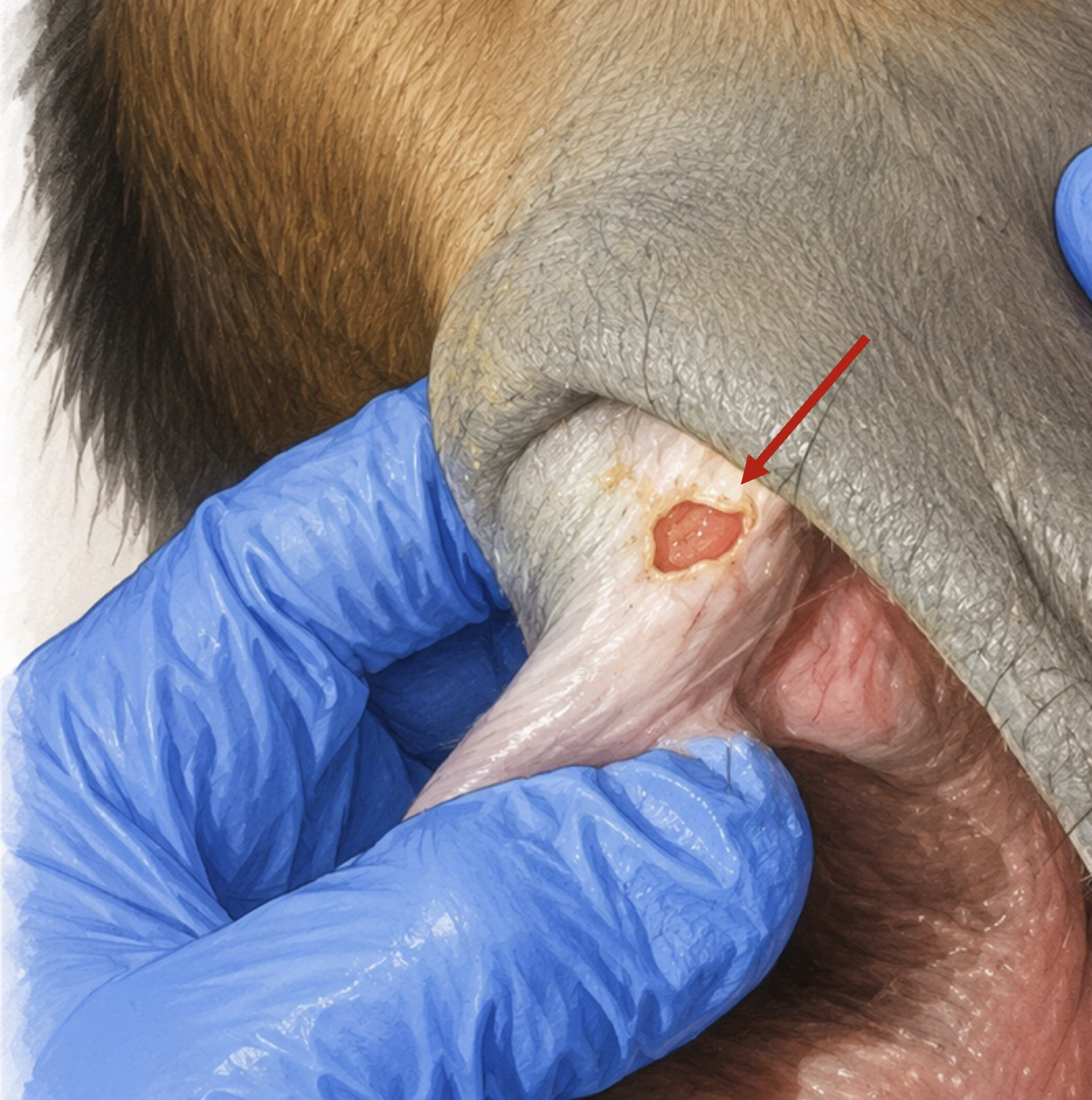
The outer and inner surfaces of the corners of the mouth are visible. A distinct mouth lesion is present on the inner surface (see arrow).
3. Inspect the Bars of the Mouth
The bars are the toothless part of the lower jaw, between the incisors and the cheek teeth, where the bit rests when the horse is bridled.
To inspect the bars, slowly slide your thumb down from the corner of the mouth while continuing to hold the lip gently outward. This will expose the bars, the toothless section of the lower jaw where the bit rests.
Inspect the entire length of the bars for ulcers or any other injuries.
Some horses will open their mouths slightly during the inspection. This can make the bars easier to see because the tongue lifts away from the area.
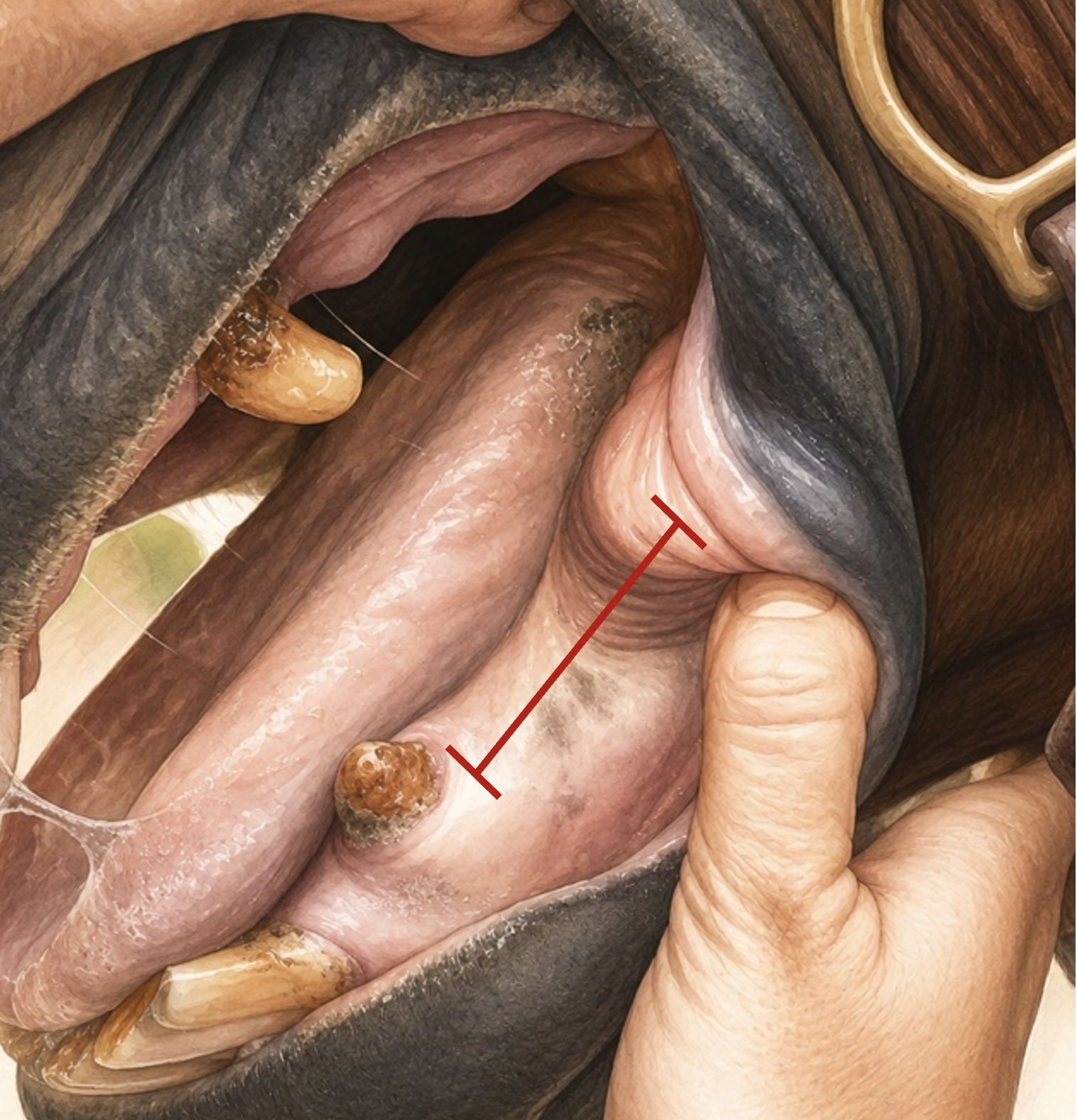
The bars of the horse’s mouth are marked with a red line
4. Repeat on the Other Side
Inspect the opposite side of the mouth in the same way. It is important to check both sides, as injuries may differ from one side to the other.
Areas Requiring Further Inspection
If the horse opens its mouth, you may also be able to see part of the tongue and the lining of the cheeks. However, this does not constitute a complete examination.
If you suspect injuries to the tongue or deeper structures inside the mouth, the horse should be examined by a veterinarian.
A thorough oral examination often requires a mouth speculum and, in some cases, sedation.
If you find redness or lesions
If you find redness, lesions, or any other type of injury, your horse's mouth has been injured.
The horse should not be ridden or driven with a bit until the injury has completely healed.
At the same time, you should identify the cause of the injury. Consider, for example:
Does the bit and the rest of the tack fit correctly?
Is your riding or driving style creating excessive rein pressure?
Are the injuries present on both sides of the mouth, or only on one side?
Why Do Bit Injuries Occur?
Bit injuries occur when the tissues of the horse's mouth are subjected to more pressure or stress than they can tolerate.
The forces involved arise from the interaction between the rider's or driver's hands on the reins, the bit, the horse's mouth, and the way the horse is ridden or driven.
For this reason, it is always important to investigate why the fit of the tack, the equipment itself, or the use of the reins is causing problems for the horse.
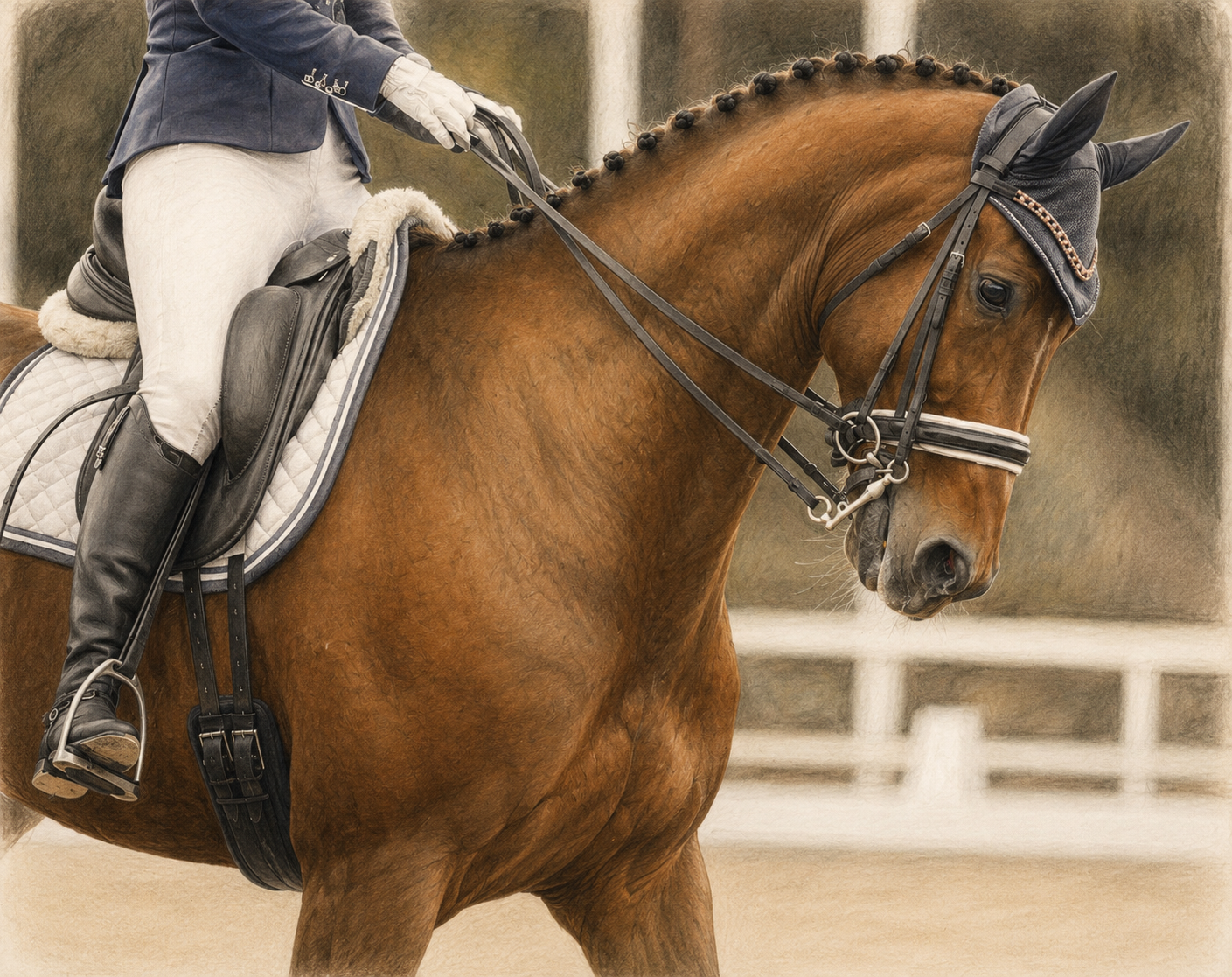
The rider applies pressure to the horse's mouth through the reins. If the pressure becomes excessive, it can cause injury. When a bit provides mechanical leverage (such as a curb bit), the rider's feel for the pressure being applied inside the horse's mouth is reduced. This makes it more difficult for the rider to judge how much pressure their hands are exerting on the horse's mouth.
In some cases, mouth injuries are associated with mental stress or physical problems affecting the horse. For example, lameness or back pain may cause a horse to alter its movement and shift more weight onto the forehand to relieve discomfort elsewhere in the body. If the rider simultaneously maintains excessive rein tension, the pressure exerted by the bit increase, thereby increasing the risk of mouth injuries.
Regular inspection of the horse's mouth is a simple way to monitor its welfare and detect problems before they become more serious.
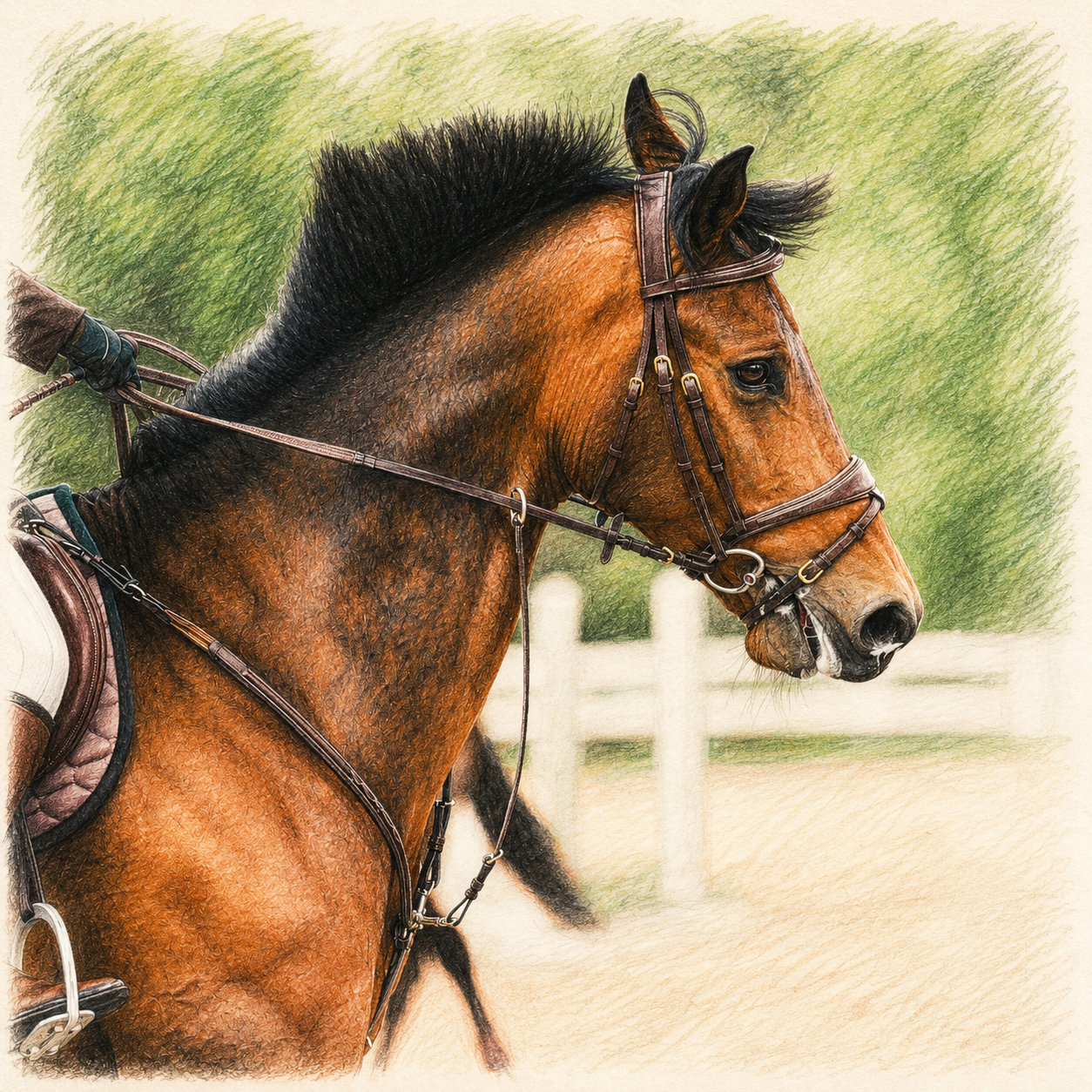
When a horse is subjected to mental or physical stress during riding or driving, it will often try to avoid or relieve that stress in various ways. For example, it may open its mouth, move its head up and down, lean more heavily on the bit, or display other forms of conflict behaviour. Depending on the underlying cause of the stress and the type of conflict behaviour shown, the risk of the horse biting its own tongue or cheek, or developing pressure ulcers from the bit, increases.
What Do Bit Injuries Look Like?
Almost all bit injuries are caused by prolonged or excessive pressure from the bit on the soft, sensitive tissues of the mouth. The injuries often develop gradually and may worsen if the horse continues to be ridden or driven with a bit before the tissues have healed.
The most common signs of bit injuries are redness and lesions. The most common type of injury is a pressure ulcer. These type of lesions usually do not bleed, even though the tissue has been damaged.
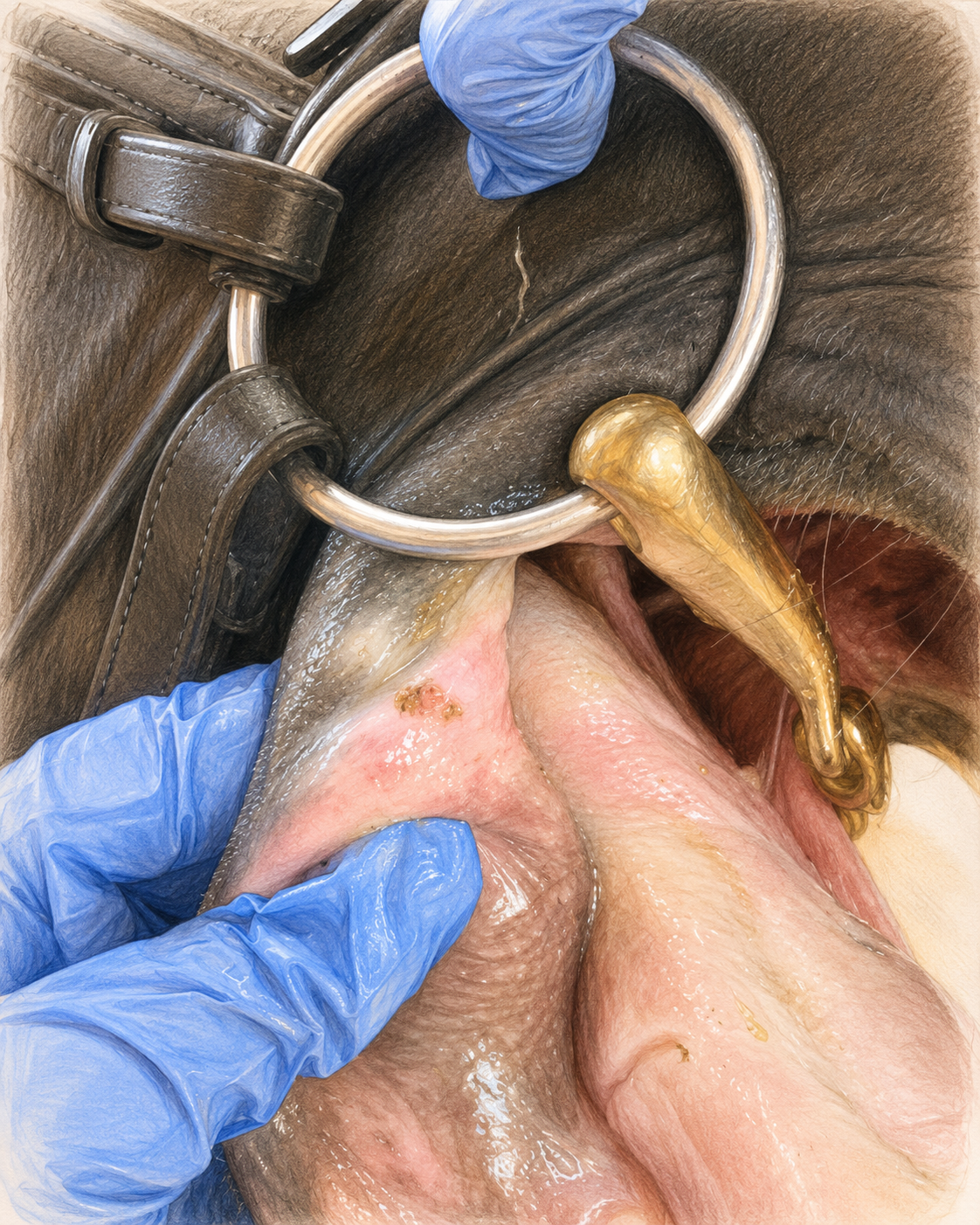
Pressure ulcer with a scab (red arrow), redness caused by excessive pressure on the oral mucosa (blue arrows), and white scar tissue from a healed injury (orange arrow).
You may also find evidence of previous injuries, such as whitish scar tissue or V-shaped splits on the inside of the corners of the mouth resulting from deeper wounds.
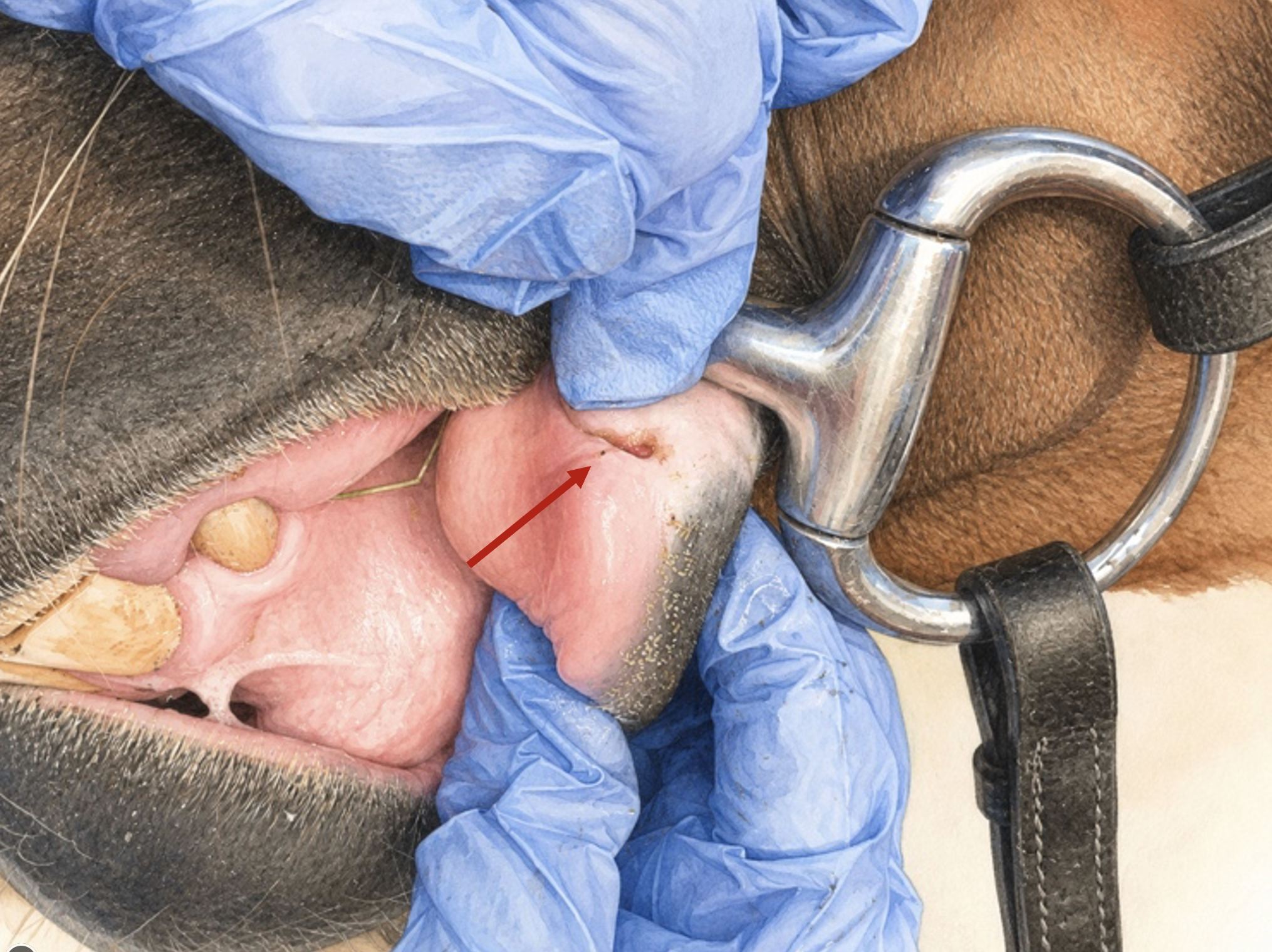
Chronic split at the corner of the horse's mouth with an ulcer at its base (see arrow).
Blood in the Mouth during Riding or Driving
Blood in the mouth during riding or driving is most often caused by the horse biting its own tongue or the lining of its cheek. This is a different type of injury from the pressure ulcers caused by excessive loading from the bit.
Horses do not normally bite themselves inside the mouth. When this occurs, it is often a sign that the horse has been experiencing mental and/or physical stress to which it has attempted to respond and even flee from. In some cases, marked agitation or conflict behaviours may cause the horse to bite its tongue or cheek with sufficient force to produce bleeding.
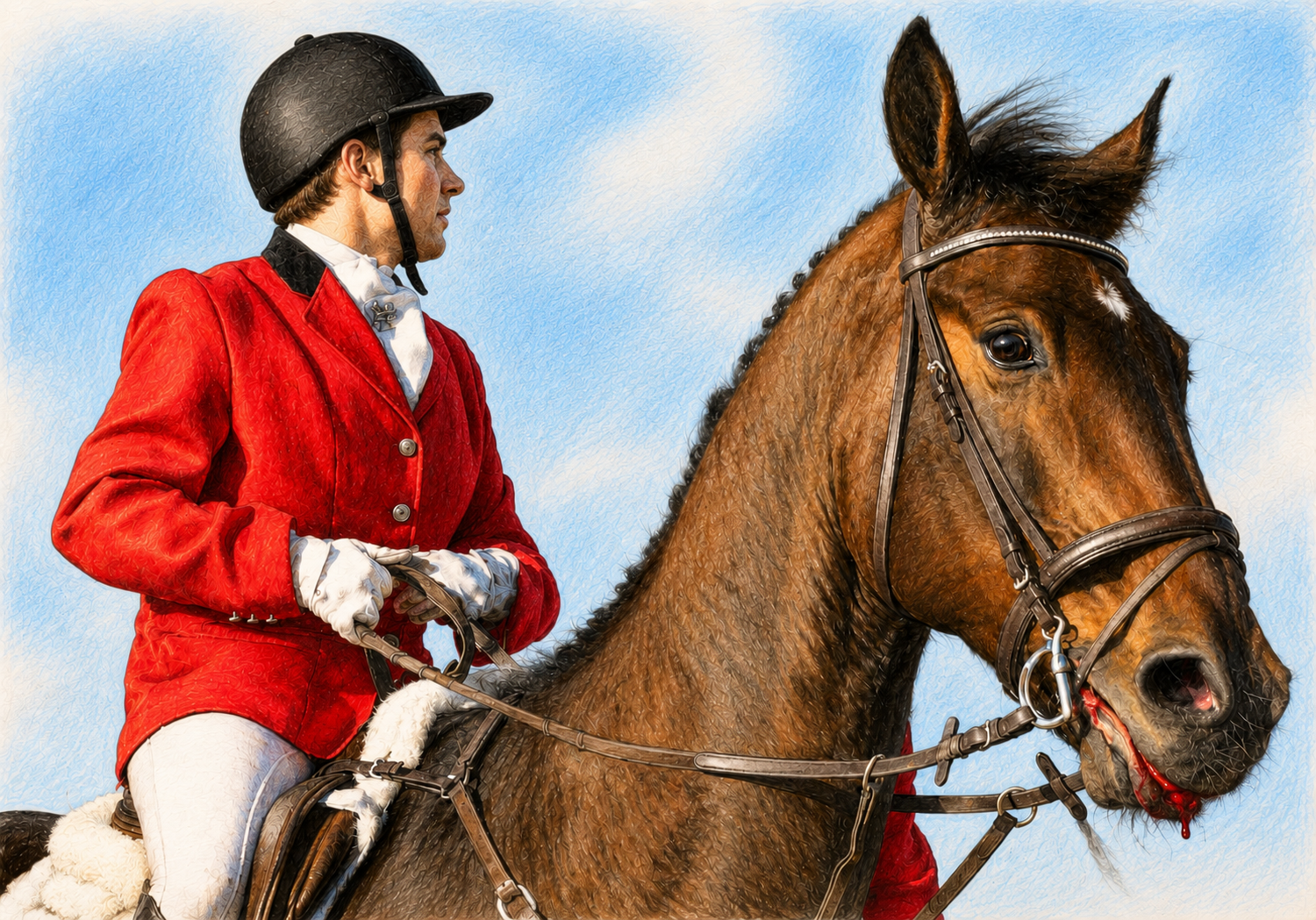
It is not normal for a horse to bite itself and bleed from the mouth. When this occurs, it is often a sign that the horse has been subjected to stress or pressure that has caused it to bite its own tongue or cheek.
Are Mouth Injuries Painful?
Yes. Mouth injuries are painful for the horse.
The tissues of the horse's mouth are highly sensitive and contain a dense network of sensory receptors and pain receptors. This allows the horse to sort its food efficiently and to react immediately if the tissues of the mouth are damaged.
When injuries occur as a result of pressure from the bit during riding or driving, the horse experiences pain. Even minor injuries are uncomfortable, and repeated loading can worsen the damage and delay healing. Mouthinjuries should therefore always be addressed immediately.
If Your Horse Does Not Stand Still During a Mouth Examination
Most horses can have their mouths inspected for bit injuries without difficulty. They are already accustomed to the same areas being handled when the bridle and bit are fitted.
Some horses, however, need time to learn that a mouth inspection is neither painful nor unpleasant. Take your time and make sure your horse feels safe and relaxed throughout the examination. Calm, confidenthandling is important for the safety of both the horse and the person carrying out the inspection.
If your horse cannot be trained to accept the inspection calmly and confidently, you should seek help from a professional with experience in equine behaviour and training. Using positive training methods, includingpositive reinforcement, the horse can gradually learn to stand quietly and feel comfortable during a mouth inspection.
References:
Uldahl, M.; Clayton, H.M. Lesions associated with the use of bits, nosebands, spurs and whips in Danish Competition Horses. Equine Veterinary Journal, 2018.
Uldahl, M.; Bundgaard, L.; Dahl, J.; Clayton, H.M. Pre-Competition Oral Findings in Danish Sport Horses and Ponies Competing at High Level. Animals, 2022.
Uldahl, M.; Bundgaard, L.; Dahl, J.; Clayton, H.M. Assessment of Skin and Mucosa at the Oral Commissures to Assess Pathology from Bit Wear: The Oral Commissure Assessment Protocol (OCA) for Analysis and Categorisation of Oral Commissures. Animals, 2022.
Christensen, J.W.; Uldahl, M. Oral Behaviour During Riding is Associated with Oral Lesions in Dressage Horses, -A Field Study. Applied Animal Behaviour Science, 2024.
Uldahl, M.; Mellor, D. Regulatory Integrity and Welfare in Horse Sport: A Constructively Critical Perspective. Animals, 2025.
See also: